Unprecedented changes are expected in the SAP market over the next few years. The transition to the new S4/HANA version, combined with the spread of cloud architectures and digitalization, is disrupting the balance of power and opening new opportunities for those who can navigate the stormy waters. Techwave, celebrating its 25th anniversary this year, is preparing for these changes. A quarter of a century ago, it introduced something new to the market with its hosted SAP solutions. We spoke with Dr. Attila Molnár, Techwave’s newly appointed managing director, about past achievements, present challenges and future opportunities.
◼︎ In the Triangle of Trends
– Techwave entered a new era in 2016 when it became part of a global network. How has this change impacted the company?
– One of the most significant benefits was gaining access to a vast knowledge base. The SAP world has changed dramatically in recent years, with the introduction of S4/HANA fundamentally reshaping the ecosystem. Everyone working with SAP has had to relearn many aspects, and with Techwave’s support, we have been able to shorten this learning cycle. But knowledge transfer is a two-way street. We have accumulated extensive experience in SAP hosting and development, which was unique within the company group. This was one of the reasons why Techwave established a regional development center In Hungary. Trust also plays a key role—the contracts we sign are backed by a global company with all its professional and financial strength, ensuring its presence for the next 5-10 years. This allows us to innovate more boldly, as we have the necessary resources, particularly in areas such as artificial intelligence, which is of great importance for the future.
– What developments have taken place at Techwave Hungary?
– These developments can be categorized into three main areas. The first includes SAP developments necessitated by the specific requirements of the Hungarian market, such as NAV Online, EKÁER, e-VAT, and e-invoicing. We fully integrated these into SAP, embedding the solution into the database and user interface.
The second category consists of specialized industry solutions. We have strong positions in manufacturing and food production. Joining the Techwave group expanded our reach beyond a dozen Hungarian clients to potentially hundreds or thousands of global customers.
Finally, the third major category includes functional products. For instance, we developed software that enables precise cost accounting and controlling in project-based operations. This is particularly useful for universities managing external grant funds, as it allows them to track working hours for researchers and administrators. We are also developing software to handle ESG reporting obligations comprehensively. Many companies need to submit ESG reports, and our solution automatically generates the necessary data from corporate core systems in real time.
| Two Names, One Story
In early 2000, HostLogic Kft. was established as a Hungarian subsidiary of an American company, focusing on implementing SAP R/3 systems and developing add-ons. However, the „American adventure” was short-lived. By the end of the same year, the American owners offered the Hungarian management the opportunity to buy out the company, which they accepted. HostLogic brought something new to the Hungarian SAP market: it made enterprise resource planning systems available via hosting (or what we might now call a private cloud). „At that time, the market didn’t fully understand what we were doing or why. We were pioneers in this model at the regional level, but within 15 years, we built a company worth 3 billion HUF,” says Dr. Attila Molnár. The company also developed various SAP-based solutions alongside its hosting services. The next milestone came in 2016. „We realized we had reached the limits of growth under the given circumstances and needed a change,” recalls the managing director. The timing was perfect, as the US-based Techwave was expanding its European presence. HostLogic became part of Techwave, adopted its name, but retained its Hungarian management, and the company’s regional development center was established in Hungary. |
– You mentioned significant changes in the SAP world. How has this affected the market and clients?
– It is evident that three major trends are simultaneously impacting SAP-customers, leading to considerable confusion. These three trends are the introduction of SAP S4/HANA and the mandatory transition; the shift towards cloud-based IT operations,;and the overall digital transformation, involving the re-engineering of business processes and the adoption of new tools and systems.
Many clients struggle to separate these trends. Do they want to move to the cloud? Are they simply transitioning to the new SAP version? Or do they want to digitize their business operations in general? Or all three at once?
Given this complexity, finding the right answers has become increasingly challenging. Implementing and managing enterprise IT has never been this complicated. There are at least four or five different SAP ERP variants, and understanding their pros and cons is a daunting task. Moreover, every IT investment today must demonstrate clear business value and return on investment.

As service providers, we stand between the software vendors and the users. Vendors promise outstanding results, rapid ROI, and streamlined business processes. Users believe and expect these outcomes. However, if a company implements a new system for its e-commerce processes and moves to the cloud but doesn’t see the expected increase in average basket value a year later, IT often gets blamed—even if external factors, such as increased competition from Chinese companies, are the real cause. The gap between expectations and achievable results can be significant, and our role is to provide realistic and ethical services to our clients.
– What is Techwave’s stance in the „brownfield vs. greenfield” debate?
– We do not take a pre-set stance, as the decision depends on our clients’ business priorities. Two key factors influence these decisions. One is what happens to historical business data. In a „greenfield” implementation, a completely new system is built, which means the database structure changes. If a company wants to analyze historical data in the same depth, complex solutions are required, which can be a deterrent.
On the other hand, some executives—often not IT specialists—believe their existing system is outdated and no longer meets today’s needs. They opt for a complete overhaul, regardless of cost.
These decisions highlight how much the SAP landscape has evolved. Previously, best practices guided every aspect of implementation, ensuring reliable results. Now, businesses must navigate a myriad of use cases, making decision-making increasingly difficult.
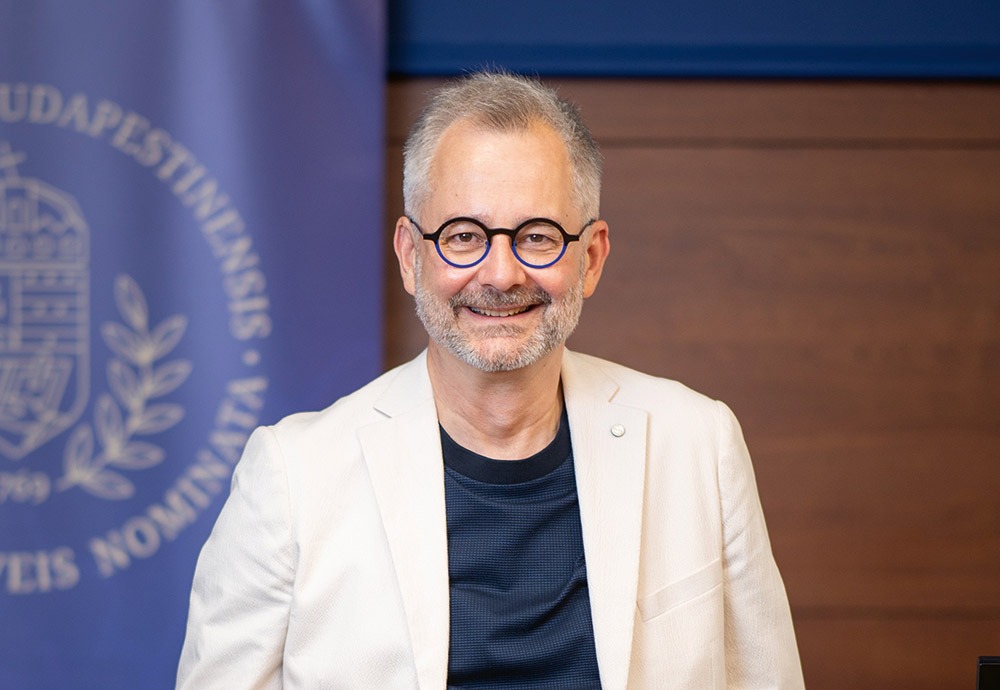
| Dr. Attila Molnár graduated as an economist from the Budapest University of Economics and the University of Passau, specializing in corporate governance. In 2015, he earned a PhD in economics, with his research focusing on the role of information management in corporate governance. He has been teaching at the Department of Information Management at Szent István University for over 20 years and has been an associate professor at the Metropolitan University’s Institute of Marketing and Communication Science since 2020.
In the early 2000s, he joined the company then known as HostLogic. Initially, he was responsible for the company’s sales and marketing activities, later becoming the Director of the New Business division at Techwave Hungary Zrt. Following the retirement of his predecessor, he assumed the position of CEO at the beginning of this year. A passionate tennis player, he plays frequently and enthusiastically with his family, including his sons, who were also competitive tennis players. |
– What can be done to prevent users from getting lost in this maze?
– Throughout our work, we have encountered countless questions regarding the transition to SAP S4/HANA, both technical and business-related. It quickly became clear that there are so many questions and branching paths in the answers that no CIO, CFO, or CEO could address them all. That’s why we developed the S4/HANA Preparation Tool, which essentially serves as a guided “consultation session.”
– How does this work in practice?
– We can address SAP implementation or transition questions on multiple levels. If someone just wants to understand the key directions and the criteria to consider, they will receive that information. Those with specific implementation-related inquiries will also get answers. If someone feels they might have overlooked something, we help them identify the necessary questions. And if they prefer to stay out of the process entirely, we can even take over tasks such as writing the tender documentation or the RFP.
– But these are still just questions—what about the answers?
– Of course, we provide answers as well. Clients receive them through our SCJ, Smart Conversion Journey, and Move 2 Cloud solutions. Whether their SAP system runs on their own infrastructure or is hosted by us, we outline a “customer journey”—a path that guides them through SAP conversion and cloud migration. They can see where to start, how long the process will take, how many steps they need to go through, how much it will cost, and what they will gain in the end.
In summary, both solutions help clients find the right direction. The first is more theoretical, clarifying the questions, while the latter is more practical, offering concrete examples.
– How do you see the market trends for the near and distant future?
– One thing is certain: in the coming years, Hungarian companies will spend billions of forints on their SAP systems, and the market will experience shifts that have not been seen in a long time. Service providers will now have a chance to acquire new users and markets, as many long-standing partnerships may be reevaluated due to the convergence of the three major trends we mentioned earlier.
The biggest question, in my opinion, is how many Hungarian companies will wake up and start the transition. I believe that more will do so in 2025 than in 2024, but the real surge will come in 2026–27. The next few years will be particularly interesting because, compared to the size of the Hungarian market, there are a few massive users. If the pharmaceutical, energy, or financial giants accelerate their transitions, they could create a vacuum, leaving smaller users struggling to keep up.
We are certainly expecting growth. We will have work for the next five years, but I am not worried about the more distant future either. Even after the S4/HANA transition projects conclude, business transformation efforts will still be necessary. Our key competitive advantage over many other SAP partners lies in our deep expertise not only in SAP but also in cloud computing and digitalization. In this regard, we benefit greatly from Techwave’s global partner ecosystem, which provides a wide range of solutions to support enterprise operations.

– As the newly appointed head of the Hungarian subsidiary, what do you see as your biggest challenge?
– The most important task is to align the company with this extremely dynamic market environment. I want the Hungarian Techwave to be more agile—meaning we need to identify and capitalize on important trends more quickly. We also need to rethink our services because customer expectations have changed. Let me refer back to the fact that business leaders now decide on IT solutions based on return on investment.
– How do you plan to handle this in terms of workforce?
– We definitely want to expand, given the tasks ahead of us. But just as importantly, we need to develop the skills and knowledge of our existing colleagues. We also need to rethink our sales approach. Previously, the focus was on how to configure the software to fit a company’s operations. With the new SAP systems, especially RISE with SAP and GROW with SAP, we need to explain how the software works and why it works that way. This requires consultants and project managers with a different mindset, and we must provide new types of training for our team.
– Corporate culture and leadership attitude are often sensitive topics in multinational companies. How does this work at Techwave?
– It’s quite interesting in our case. Techwave is an American-based company, and it operates with the professionalism you would expect. However, the company is also shaped by the fact that its two owners are of Indian origin, bringing a level of personal connection that is uncommon in multinationals. They build fantastic human relationships and make thoughtful gestures—for example, the company’s annual management meeting is always held in India because they enjoy hosting their colleagues in their home country.
On the one hand, they run the company with a high level of professionalism; on the other, they soften the rigid corporate world with a strong human touch.